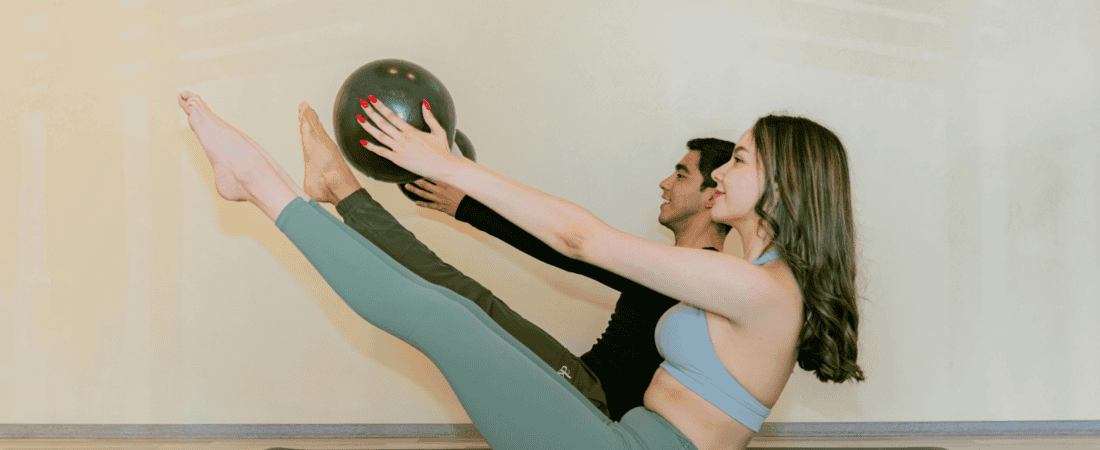
Looking for herniated disc exercises you can actually do every day? After an L4/L5 herniated disc injury changed how I trained, these are the six Pilates movements I use every day to reduce stiffness, support my spine, and stay active.
Quick Takeaways
If you’re looking for herniated disc exercises, here’s what I’ve learned after recovering from an L4/L5 herniated disc:
- Slow and controlled is the name of the game.
- Progressive overload will look different.
- Consistency has allowed for quicker recovery when a flare up occurs.
- These exercises help reduce stiffness, prepare my spine for movement, and stay active even during a flare up.
- Always talk with your doctor or physical therapist before beginning a new exercise routine.
Introduction
When I was 28, I thought I was doing everything right. I was strength training five or six days a week, eating well, and getting stronger every month. Then I noticed a dull ache in my lower back after a leg day.
At first, I ignored it. It felt like the soreness you get a couple of days after a heavy workout. I assumed it would go away. Instead, it got worse.
Over the next few weeks, everyday movements became harder. Bending over to put on socks. Standing up from a chair. Getting out of bed in the morning. Sitting at my desk for eight hours became miserable, and I constantly had a heating pad behind my back.
Eventually, I was walking hunched over because standing upright hurt so much. An MRI finally gave me an answer. I had an L4/L5 herniated disc that was irritating my sciatic nerve.
The next six months looked very different than I expected. Physical therapy became part of my daily routine. I relied on pain medication while my back calmed down, and I had to completely rethink the way I exercised. As a former athlete, that was one of the hardest adjustments.
For years working out always meant lifting heavier, pushing harder, and constantly progressing. Suddenly, I couldn’t train the same way anymore. Instead of asking, “How can I max my PR?” I had to start asking, “How can I move without pain?” That shift changed everything. Today I still strength train, but I train differently. These are the six herniated disc exercises I come back to every day for relief.
What My MRI Showed
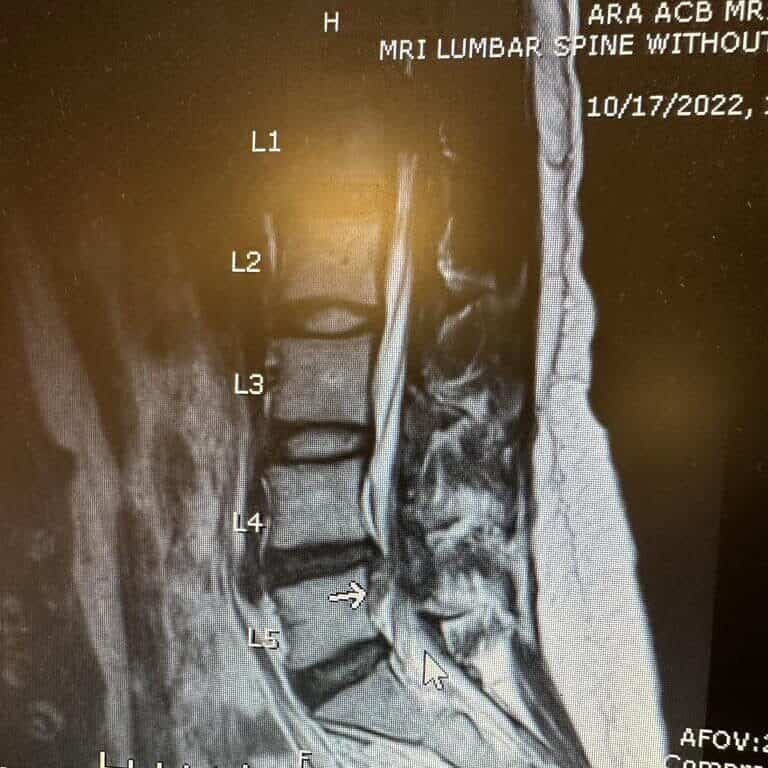
When my MRI came back, I finally had an answer. Here you can see the healthy disc at L2/L3, plump and hydrated, sitting evenly between the vertebrae.
At L4/L5, you can see the darker, collapsed space. My disc was pressing backward, irritating my sciatic nerve and causing shooting pain down my leg.
Lower back pain is incredibly common and can have many different causes, from muscle strain to disc injuries, which is why getting an accurate diagnosis matters.
Seeing the MRI began my road to recovery. I spent two months in physical therapy, then graduated to Pilates to safely rebuild my mobility and manage flare-ups on my own terms.
One thing the doctors told me stuck. I was young and this would be lifelong pain management. After we talked it through, she noted surgery wouldn’t add value. The answer was adjusting how I train to build a stronger foundation. That’s exactly why these six exercises became my daily go-tos.
How I Approach Herniated Disc Exercises
One of the biggest lessons I learned is that lower back pain starts with your core. My hips had become stiff from sitting at work for 8+ hours, my core wasn’t doing enough to support my spine, and I needed to build up my deep core, including the intercostal muscles between my ribs, so my other muscle groups would stop overcompensating.
When I looked at my MRI, it was obvious that something had changed structurally. But recovering wasn’t just about the disc itself. It was about improving everything around it. That’s when Pilates completely changed my perspective. Instead of only chasing heavier lifts, I started focusing on movement quality.
Today, every workout starts with the same priorities. Before I lift a single weight, I focus on:
- Improving spinal mobility
- Activating my deep core
- Building hip stability
- Using my breath to brace my core
- Preparing my spine before adding load
Ironically, spending fifteen minutes on those fundamentals made the rest of my workout feel stronger. Now I think of Pilates the same way I think about brushing my teeth. It’s not something I do once in a while. It’s part of taking care of my body.
Those principles are exactly what these six Pilates movements are built around.
Why I Do These Pilates Movements Every Day
People often ask why I do the same movements every morning. The answer is simple: I don’t wait until I’m in pain to take care of my back. I usually do this routine first thing in the morning, before strength training, or after a long day at my desk. It’s my way of preparing my body to move well instead of reacting after my back starts feeling stiff.
These six herniated disc exercises help me:
- Reduce stiffness that builds up overnight or after hours of sitting
- Activate my core and glutes so my lower back isn’t doing their job for them
- Prepare my spine for movement before adding weights
- Catch a flare-up early, before it turns into a bad week
For me, this routine is the difference between managing my herniated disc and being managed by it. That’s why I come back to these movements every day.
Who These Movements Are For
If you’re looking for herniated disc exercises, this routine may be helpful if you:
- Sit at a desk most of the day
- Wake up with lower back stiffness
- Have been diagnosed with an L4/L5 herniated disc
- Battling Sciatic flare-ups from a disc issue
- Want to continue strength training while protecting your back
- Are looking for a gentle Pilates routine to support your recovery
If you’re experiencing severe pain, numbness, or worsening symptoms, talk with your healthcare provider before starting a new exercise routine.
Routine at a Glance
- Time: 15–20 minutes
- Equipment: Pull-up bar (for decompression hang)
- When I do them: Morning, before lifting, and after long workdays
Here’s how I do each movement.
The Six Herniated Disc Exercises
1. Spinal Decompression Hang
Best for: Morning stiffness and decompressing after long periods of sitting.
How to Do It
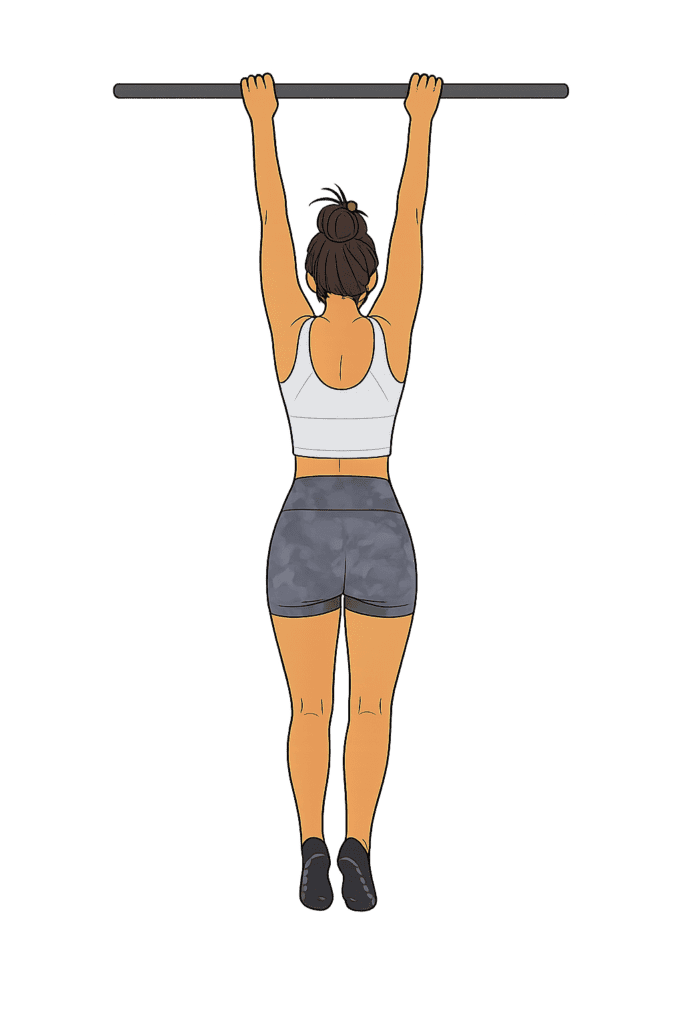
Grab a pull-up bar or sturdy doorframe bar with an overhand grip, shoulder-width apart. Let your feet come off the ground (or keep knees slightly bent if they’re still touching), and just hang. Relax your shoulders and let your spine lengthen instead of actively pulling yourself up. Hold for 20-30 seconds, breathing normally, and repeat 2-3 rounds.
Why I Use It
This is first up on my series of herniated disc exercises after sleeping or sitting for long periods. Hanging for 20 to 30 seconds helps me feel like I can move more freely before I start my day. Repeat this for 2-3 rounds.
2. Standing Extension
Best for: Counteracting hours of sitting and improving spinal extension.
How to Do It
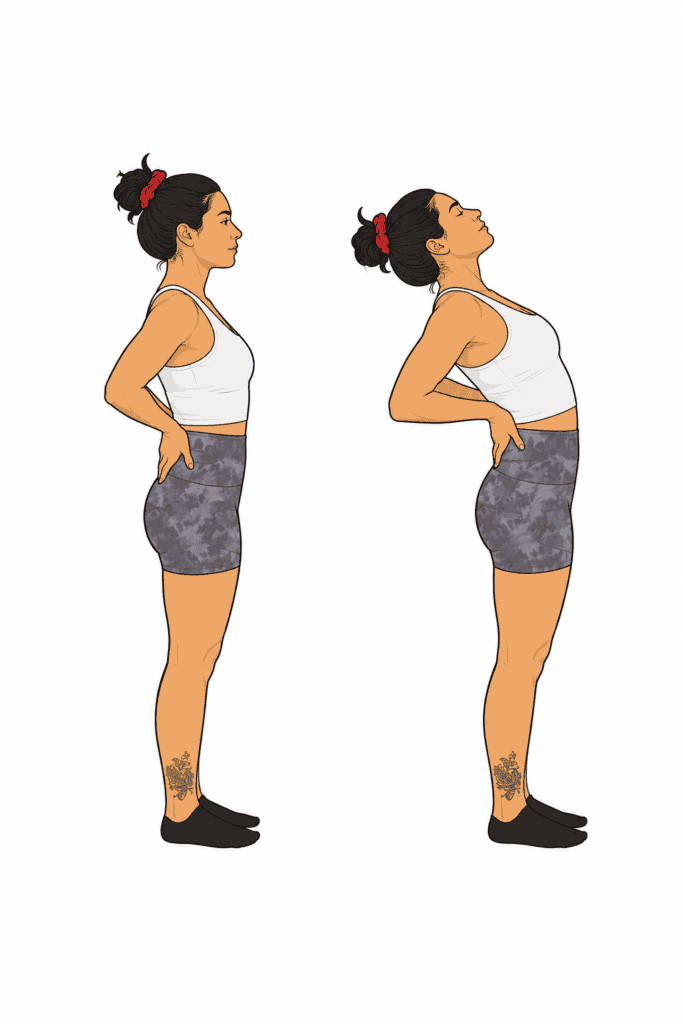
Stand with feet hip-width apart, hands placed on your low back for support. Gently lean backward, looking slightly upward, keeping the movement small and controlled. Hold 2-3 seconds and return to standing. Repeat 8-10 reps for 2-3 rounds.
Why I Use It
This is the standing equivalent of swan or half cobra. It helps undo hours of forward flexion in a position you can do anywhere. It’s the one I do at my desk between meetings, and again right before I pick up anything heavy, since it’s a fast way to reset spinal position without getting down on the ground.
3. Cat Cow
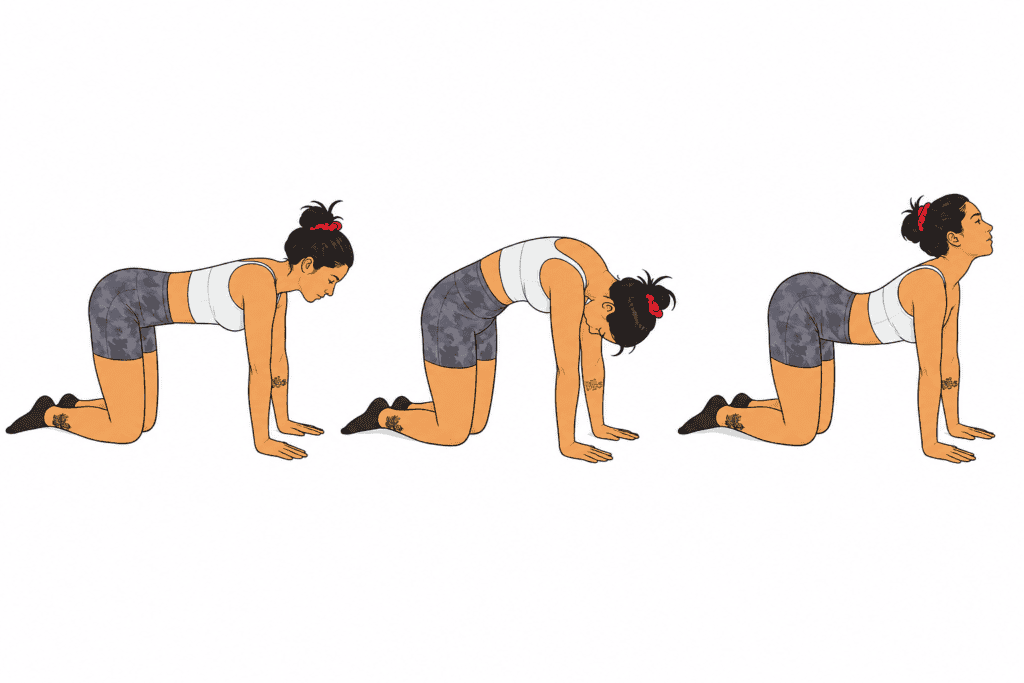
Best for: Gentle spinal mobility and warming up before movement.
How to Do It
Start on all fours, hands under shoulders, knees under hips. On an inhale, drop your belly and lift your chest, head, and tailbone (cow). On an exhale, round your spine toward the ceiling and tuck your chin and tailbone (cat). Move slowly, syncing each shift with your breath, repeat 8-10 reps for 2-3 rounds.
Why I Use It
This takes your spine through a full, controlled range of flexion and extension without any load on it. It’s gentle enough to do first thing in the morning or right after a day of sitting, and it segment-by-segment mobilizes the vertebrae instead of asking one area (usually the lower back) to compensate for stiffness everywhere else.
4. Swan
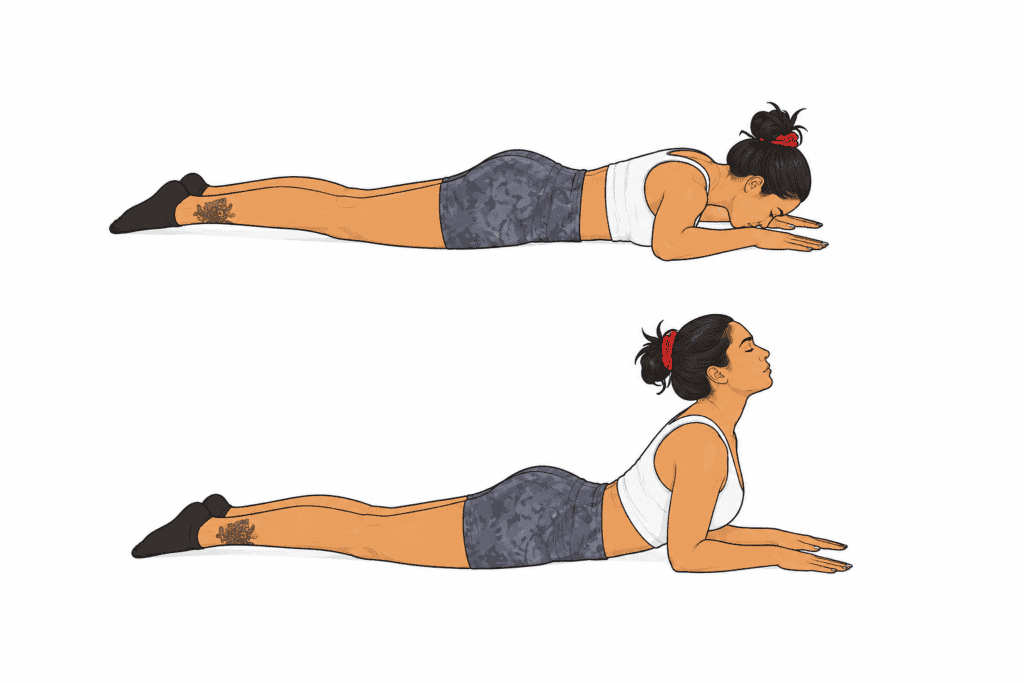
Best for: Encouraging gentle spinal extension after prolonged sitting.
How to Do It
Lie face down, forearms (or hands) on the ground under your shoulders. Press down gently to lift your chest off the floor while keeping your hips and pelvis grounded. Only go as high as feels comfortable, this is a small lift, not a full backbend. Hold 5-10 seconds, lower, and repeat 8-10 reps for 2-3 rounds.
Why I Use It
This is a controlled extension move, the direct opposite of the forward-flexed position most of us live in all day at a desk. Gentle extension can help counteract pressure off the back of the disc where a lot of herniations occur, though how far to extend really depends on your specific presentation, which is exactly why checking with your PT before pushing range here matters.
5. Bird Dog
Best for: Building deep core stability and improving balance.
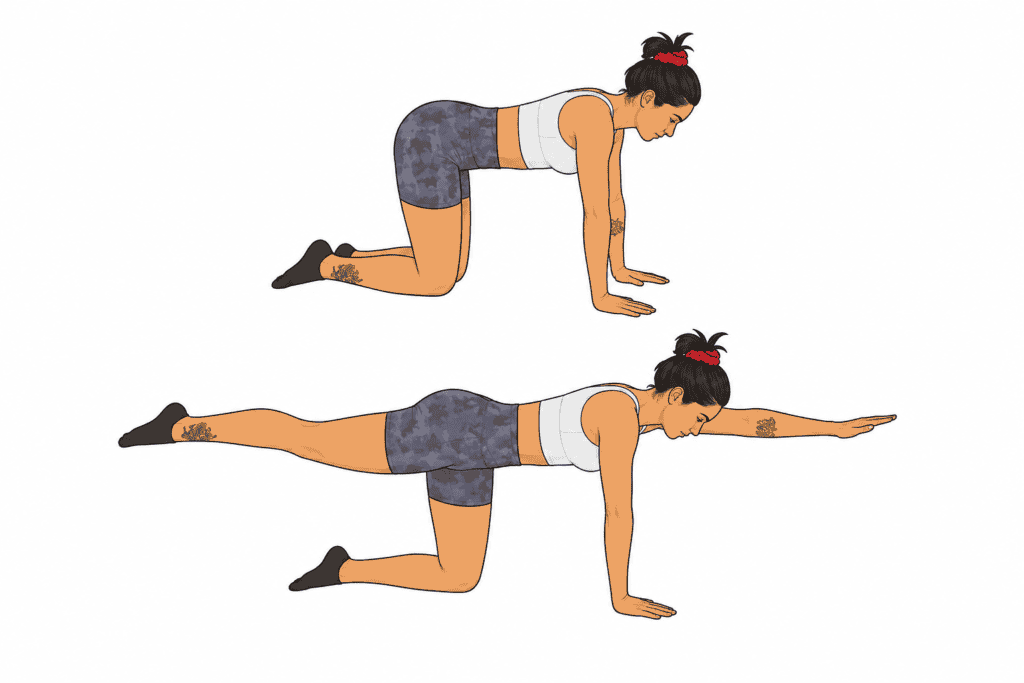
How to Do It
From all fours, extend your right arm straight forward and your left leg straight back at the same time, keeping your hips level and spine neutral (no arching or rounding). Hold 2-3 seconds, return to center, and switch sides. Do 8-10 reps per side for 2-3 rounds.
Why I Use It
This is the real stability work in the sequence. It trains your deep core and glutes to keep your spine neutral while your limbs move, which is exactly the kind of control you need before lifting anything heavy. A lot of back pain comes from the spine compensating for a core that isn’t doing its job, and this move retrains that pattern directly.
6. Plank
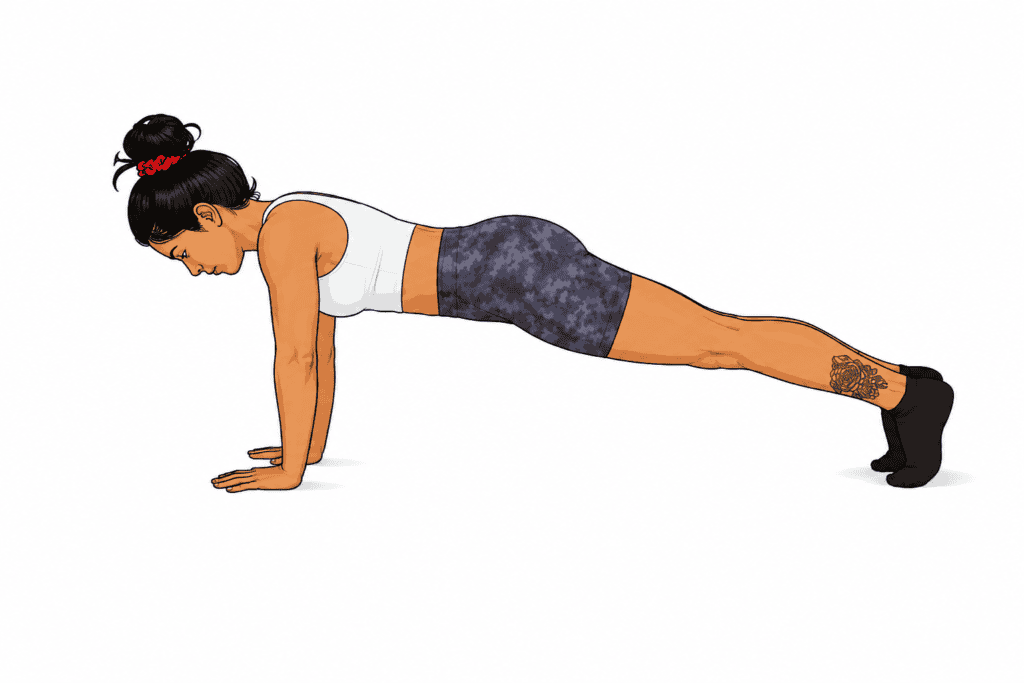
Best for: Strengthening the core before lifting or other loaded movements.
How to Do It
From a push-up position, arms fully extended and hands under shoulders, engage your core and glutes so your body forms one straight line from head to heels. Avoid letting your hips sag or pike up. Ensure your pushing into your palms evenly, so your chest doesn’t sag down. Hold for 30-45 seconds, focusing on bracing your core rather than just holding the position.
Why I Use It
This is the final check before you load your spine with anything else. It asks everything you just activated (deep core, glutes, spinal stabilizers) to hold under tension, which is the closest thing to a dress rehearsal for whatever’s coming next, whether that’s a squat rack or just standing up straight for the rest of your day.
How I Strength Train
One of the biggest mindset shifts I’ve had is realizing that modifying my workouts doesn’t mean I’ve stopped making progress. It means I’ve become smarter about how I train.
I still strength train a few days a week, but I make tactical choices for my spine health. For example, I now spend more time on hip thrusts because they allow me to load my glutes while keeping my spine in a position that’s grounded and feels better for my body.
I also spend much longer warming up and cooling down than I ever did before my injury. Ironically, taking fifteen minutes to prepare my body has allowed me to train more consistently than trying to rush into heavy lifts.
Lower Back Pain Relief Isn’t About Finding One Magic Stretch
Trust me, I searched for one. What actually changed things was building consistent habits.
Some days my back feels great. Other days, my sciatica reminds me that I still have an L4/L5 herniated disc. The difference now is that I know what helps me feel better.
These six herniated disc exercises have become part of that routine. They’re simple enough to do every day, effective enough that I keep coming back to them, and they’ve helped me continue doing the things I love: playing sports, strength training, kayaking, and getting on the floor with my nieces and nephews.
I hope they help you build a routine that keeps you moving, too.
Frequently Asked Questions
Can Pilates help with Sciatica?
If your Sciatica is being caused by an L4/L5 herniated disc like mine, Pilates may help by improving mobility, strengthening the muscles that support your spine, and reducing the stiffness that builds up from sitting all day. It isn’t a cure, and not every case of Sciatica has the same cause, which is why getting evaluated by a healthcare provider is important before starting any exercise program.
Can Pilates help with lower back pain?
Pilates isn’t a cure for lower back pain, and it won’t address every cause of back pain. But when used alongside guidance from your doctor or physical therapist, it can be an effective way to improve mobility, build stability, and reduce the stiffness that comes from sitting, lifting, or everyday life.
Many people looking for herniated disc exercises find that Pilates helps improve mobility, strengthen the deep core, and support the spine.
Is Pilates good for a herniated disc?
For many people, yes.
Pilates builds the deep core stability that supports your spine instead of asking your lower back to do all the work. It focuses on controlled movement, proper breathing, and strength rather than forcing flexibility.
Every herniated disc is different, though. What worked for my L4/L5 injury may not be appropriate for someone else’s. Always get cleared by your doctor or physical therapist before starting a new exercise routine.
What Pilates exercises are safe for an L4/L5 herniated disc?
Gentle, control-focused movements are usually where I start.
For me, that includes:
- Spinal decompression hangs
- Standing extensions
- Cat-Cow
- Swan
- Bird Dog
- Planks
The most important part isn’t the name of the exercise, it’s how you perform it. Focus on maintaining good form, moving with control, and avoiding movements that create sharp or radiating pain.
These are the six movements I personally rotate through every day.
Can you still strength train with a herniated disc?
In many cases, yes, with the right modifications and guidance from your healthcare provider.
I still strength train a few days a week, but the biggest difference is that I prepare my body first.
That means warming up my spine, activating my core, choosing exercises that work well for my body, and avoiding the mindset of pushing through pain.
Recovery didn’t mean giving up lifting. It meant learning how to lift smarter.
What movements should you avoid with a herniated disc?
The answer depends on your specific injury.
In general, many physical therapists recommend being cautious with movements like:
- Deep loaded spinal flexion
- Heavy lifting with a rounded back
- Aggressive twisting under load
- Any movement that reproduces sharp or radiating pain
Everyone’s injury is different, which is why an MRI and professional evaluation are so important.
What irritates one person’s back might feel perfectly fine for someone else.
Ready to go from flare-up to strong?
These 6 moves are the what. If you want the how, a day-by-day path in the right order, that’s my live 30-Day Challenge. We start together September 1, and founder pricing is open through launch.
Prefer to go at your own pace? Grab the $47 Self-Guided Plan (the full written program).
I’m still learning too. Every month I share what I’m discovering about living with an L4/L5 herniated disc, no miracle cures, and no fear-based advice. Come say hi on Instagram and TikTok, or join the newsletter